


Commercial Industrial Lighting
Professional Procurement & Technical Guide
Commercial and industrial lighting for warehouses, factories, commercial buildings, retail facilities, workshops, logistics spaces, and other professional environments requires a procurement approach that extends well beyond wattage and lumen output. Fixture type, mounting method, optical distribution, color temperature, ingress protection, control requirements, installation conditions, and applicable project standards all dictate successful product selection.
This guide supports standard procurement, project-based supply, distribution, replacement programs, and full OEM/ODM custom manufacturing requirements. Product specifications are fully configurable according to exact application parameters and installation environments.


Commercial & Industrial Lighting Product Range
Lighting fixtures are categorized by installation method, light distribution, application scope, and environmental requirements:
High Bay Lighting: Engineered for spaces with elevated mounting heights where concentrated and uniform illumination is mandatory. Ideal for warehouses, manufacturing plants, distribution centers, workshops, and industrial storage. High-performance models typically achieve high efficacy (130-160 lm/W or higher).
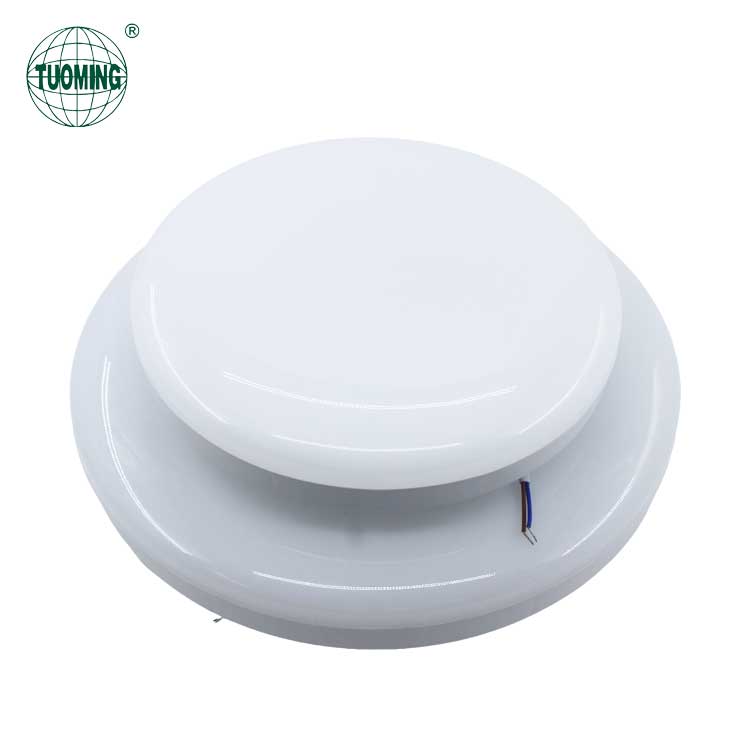
Batten & Surface-Mounted Lighting: Utilized where recessed installation is impractical or where rapid installation and straightforward maintenance are prioritized.
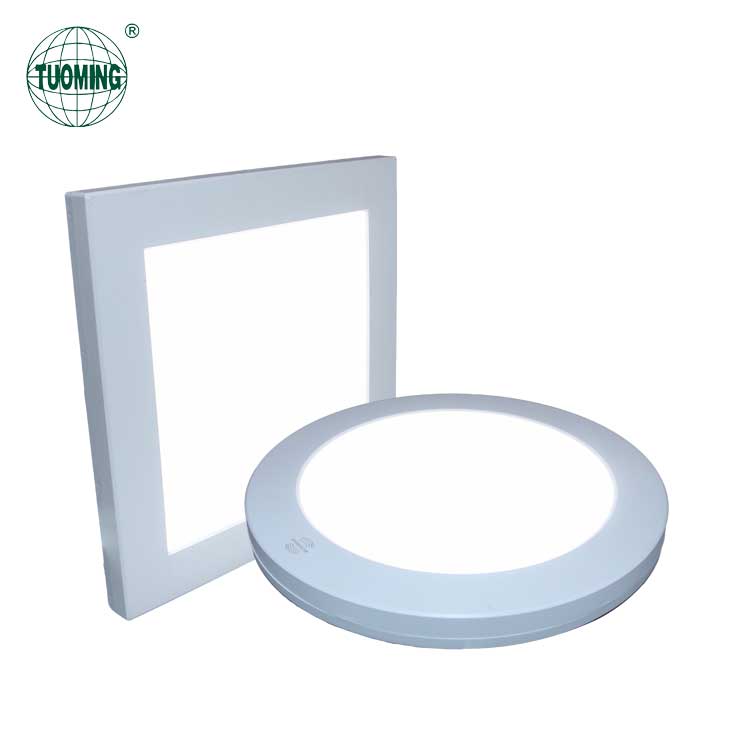
Commercial Panel & Troffer Lighting: Applied primarily in suspended grid ceilings and premium commercial indoor environments where low Unified Glare Rating (UGR < 19) is critical.
Low Bay Lighting
Tailored for lower mounting heights where high-bay configurations are unnecessary. Common in workshops, production areas, storage rooms, and retail back-of-house facilities.
Linear Commercial Lighting
Designed for continuous or evenly distributed illumination across offices, retail spaces, workshops, and commercial interiors, prioritizing low glare and visual comfort.
Bulkhead & Utility Lighting
Durable, compact general-purpose luminaires deployed in service areas, circulation spaces, plant rooms, and industrial utility zones.
Flood & Area Lighting
Heavy-duty outdoor and large-area luminaires utilized for loading docks, parking lots, building perimeters, and industrial yards.
An optimal fixture must be selected based on actual operational conditions rather than wattage alone:
1.Determine Required Light Output: Differentiate between electrical consumption (Watts) and total light output (Lumens). Target illuminance levels and fixture spacing are far more valuable for project design than power ratings alone.
2.Verify Beam Angle & Optical Distribution: Request photometric data and IES files to perform lighting simulations (Dialux) verifying working-plane illumination and glare control.
3.Assess Environmental Requirements: Match IP and IK ratings to real-world exposure risks such as dust, moisture, extreme temperatures, chemical presence, or mechanical impacts.

04
Check Mounting Height
Ceiling height directly influences light distribution and beam spread. Avoid replacing high-ceiling fixtures with arbitrary high-wattage alternatives without evaluating optics and fixture spacing.
05
Select Color Temperature & CRI
Choose appropriate CCT (neutral or cool white) to match the visual atmosphere, and require high CRI (Ra > 80 or 90) for color-critical tasks like inspection and retail display.
06
Define the Application
Identify the precise environment (warehouse, production floor, office, retail, parking, or logistics). This dictates optical distribution, mounting method, and protection ratings.
07
Confirm Electrical Compatibility
Verify input voltage, grid frequency, power factor, surge protection, driver reliability, and dimming protocols (0-10V, DALI, etc.).
Core Technical Parameters Reference Table
|
Parameter Name |
Technical Specification |
Importance for Engineering & Procurement |
|
Rated Power |
Electrical power consumption (W) |
Determines total system energy load and cable sizing. |
|
Luminous Flux |
Total light output (lm) |
Measures the actual brightness delivered by the luminaire. |
|
Luminous Efficacy |
Lighting efficiency (lm/W) |
Reflects energy conversion efficiency (targeting >= 130 lm/W for modern industrial projects). |
|
CCT (Color Temperature) |
Light color appearance (e.g., 3000K/4000K/5000K) |
Defines the visual atmosphere and suitability for the workspace. |
|
CRI (Color Rendering Index) |
Color accuracy rating (Ra > 80 or Ra > 90) |
Indicates how accurately the light reveals true object colors. |
|
Beam Angle |
Light spread angle (e.g., 60 deg / 90 deg / 120 deg) |
Dictates light coverage, throw direction, and fixture spacing. |
|
Input Voltage |
Grid compatibility (e.g., AC100-277V / AC220-240V) |
Must match local electrical grid standards. |
|
Driver Configuration |
Electrical control unit (High PF / Flicker-Free) |
Affects dimming compatibility, power stability, and lifespan. |
|
Dimming Control |
Dimming protocol (0-10V / DALI / PWM) |
Critical for energy management and smart lighting integration. |
|
IP / IK Ratings |
Dust/water ingress (IP65/67) & impact resistance (IK08) |
Essential for harsh industrial and outdoor environments. |
|
Operating Temperature |
Thermal tolerance range (-30 deg C to +50 deg C) |
Ensures stable operation in extreme hot or cold facilities. |
|
Global Certifications |
UL, DLC, CE, RoHS, SAA, etc. |
Market-specific compliance markers required for legal import and project sign-off. |
To eliminate project delays and customs clearance risks, procurement teams must align product compliance with destination market requirements:
North American Market: Demand UL / ETL safety listings and DLC (DesignLights Consortium) Standard or Premium listings. DLC qualification is frequently mandatory to secure local utility rebates and energy-efficiency incentives.
European Market: Require CE and RoHS compliance, supported by ENEC certification for high-end luminaires, ensuring adherence to strict EU low-voltage, electromagnetic compatibility (EMC), and environmental directives.
Australian / New Zealand Market: Ensure SAA electrical approval and RCM registration for regulatory market access.
Product consistency across production batches is vital for commercial projects. Our robust manufacturing and quality control process includes:
Incoming Material Inspection (IQC): Rigorous testing and verification of raw components, including LED chips, drivers, housings, lenses, and connectors.
Assembly Process Control (IPQC): Strict standardization of component placement, electrical connections, sealing applications, and torque fastening.
Electrical & Aging Testing
Execution of high/low-temperature burn-in aging cycles and switching tests to eliminate early-life component failures.
Photometric Verification
Laboratory measurement of luminous flux, distribution curves, and system efficacy.
Final Inspection (FQA)
Comprehensive pre-shipment checks covering product labeling, dimensions, packaging integrity, and included accessories.
OEM / ODM Customization Support
Beyond standard catalogue items, professional manufacturing partners offer deep flexible customization:
qualified
Electrical Customization: Tailored driver options (Philips, MeanWell, Inventronics), emergency battery backup integration, and smart sensor modules (microwave motion sensors, daylight harvesting).
environment-friendly
Mechanical & Thermal Customization: Special anti-corrosion powder coating for coastal or chemical-plant environments, custom bracket designs, and tailored housing dimensions.
Frequently Asked Questions