

Hey there! As a supplier of emergency power supplies, I often get asked one question a lot: "How long can an emergency power supply last?" It's a crucial question, especially when you're relying on these power sources during critical situations. So, let's dive right into it and explore this topic in detail.
Understanding the Basics
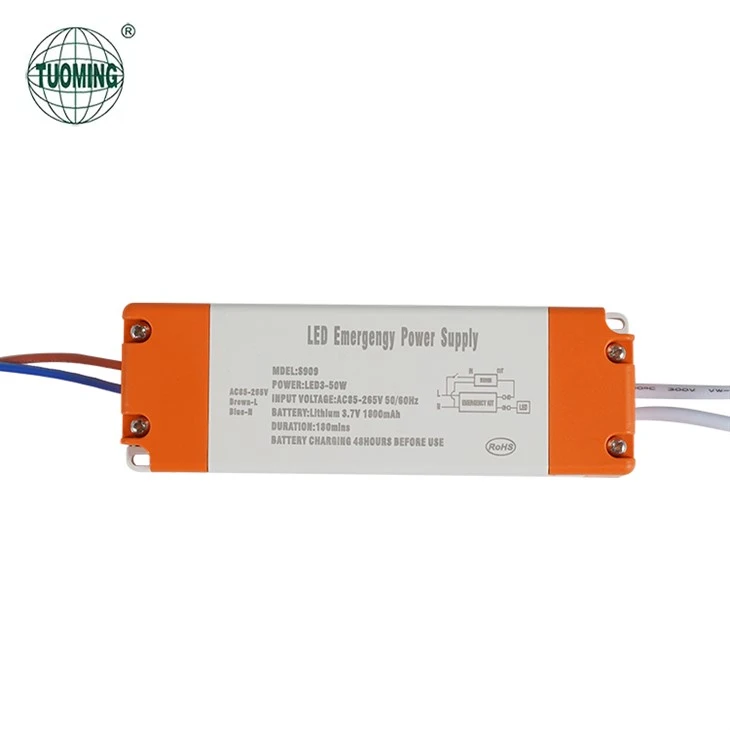
First off, what exactly is an emergency power supply? Well, it's a device that kicks in when the main power grid fails. It can be used in various settings, like homes, offices, hospitals, and industrial facilities. We offer a range of products, including Emergency Backup Power Supply, Led Emergency Backup Driver, and Emergency Light Power Supply.
Factors Affecting the Duration
The duration an emergency power supply can last depends on several factors. Let's break them down one by one.
Battery Capacity
The battery is the heart of an emergency power supply. A larger battery capacity generally means a longer runtime. For example, if you have a power supply with a high - capacity battery, it can store more energy and keep your devices running for a longer period. But keep in mind, a bigger battery also means a bulkier and more expensive unit.

Load Requirements
The amount of power your devices need is a major factor. If you're powering small LED lights, the power supply will last longer compared to running high - power appliances like refrigerators or air conditioners. You need to calculate the total wattage of the devices you want to power during an outage. For instance, a single LED bulb might consume only a few watts, while a large refrigerator could use hundreds of watts.
Efficiency of the Power Supply
The efficiency of the power supply itself plays a role. A more efficient power supply loses less energy during the conversion process. So, even with the same battery capacity, a more efficient unit can provide power for a longer time.
Age and Condition of the Battery
Over time, batteries lose their ability to hold a charge. If your battery is old or hasn't been properly maintained, it won't last as long as a new one. Regular maintenance, such as checking the battery's charge level and ensuring proper ventilation, can help extend its lifespan.
Calculating the Runtime
To get an idea of how long your emergency power supply will last, you can use a simple formula. First, find out the watt - hours (Wh) of your battery. This is usually listed on the battery's specifications. Then, divide the watt - hours by the total wattage of the devices you're powering.
For example, if you have a battery with a capacity of 1000 Wh and you're powering a device that uses 100 watts, the estimated runtime would be 1000 Wh / 100 W = 10 hours. However, this is a rough estimate, as real - world conditions can affect the actual runtime.
Different Types of Emergency Power Supplies and Their Runtimes
Uninterruptible Power Supplies (UPS)
UPS systems are commonly used for short - term power outages. They can provide power for a few minutes to a couple of hours, depending on the size and capacity. Small UPS units are often used to protect computers and other sensitive electronics. They can give you enough time to save your work and shut down your devices properly.
Generators
Generators can provide power for a much longer time. Portable generators can run for several hours on a single tank of fuel, while standby generators can run for days, as long as they have a continuous fuel supply. However, generators require regular maintenance and proper ventilation to ensure safe operation.
Solar - Powered Emergency Power Supplies
Solar - powered emergency power supplies rely on sunlight to charge their batteries. The runtime of these systems depends on the size of the solar panels, the battery capacity, and the amount of sunlight available. In sunny conditions, they can provide power for an extended period, but they may not be as reliable during cloudy days or at night.
Real - World Examples
Let's look at some real - world scenarios to understand how long an emergency power supply can last.
Home Use
In a typical home, if you're using an emergency power supply to power a few LED lights, a small TV, and a Wi - Fi router, a medium - sized UPS might last for 2 - 3 hours. If you have a larger generator, it could run these devices for a whole day or more, depending on the fuel capacity.
Office Use
In an office setting, where you have multiple computers, printers, and other equipment, a UPS might only provide power for 30 minutes to an hour. A standby generator, on the other hand, can keep the office running for an extended period, allowing employees to continue working during a power outage.
Hospital Use
Hospitals require a reliable and long - lasting emergency power supply. They use large - scale generators and backup systems to ensure that critical equipment, such as life - support machines and operating room lights, can run continuously. These systems are designed to last for days, if necessary, to ensure the safety of patients.
Importance of Choosing the Right Emergency Power Supply
Selecting the right emergency power supply is crucial. You need to consider your specific needs, such as the duration of power outage you expect, the devices you want to power, and your budget. If you live in an area with frequent power outages, investing in a high - quality, long - lasting emergency power supply is a smart move.
Contact Us for Your Emergency Power Supply Needs
If you're looking for an emergency power supply that meets your requirements, we're here to help. Our team of experts can assist you in choosing the right product based on your specific needs. Whether you need a small UPS for your home or a large - scale generator for your business, we have a wide range of options available.
Don't wait until the next power outage to realize the importance of an emergency power supply. Contact us today to discuss your needs and get a quote. We're committed to providing you with the best solutions at competitive prices.
References
- "Battery Technology Handbook" by David Linden
- "Emergency Power Systems: Design, Installation, and Maintenance" by Michael R. Brumbach


